.:[Double Click To][Close]:.
Showing posts with label Homilies. Show all posts

Year A Second Sunday of Easter/Divine Mercy Sunday

Readings: Acts 2:42-47; Ps 118:2-4.13-15.22-24; 1 Peter 1:3-9; John 20:19-31

On this Second Sunday of Easter we not only celebrate Divine Mercy, but we rejoice in the beatification of the one who proclaimed today our celebration of Divine Mercy, our much-loved Bl. Pope John Paul II. In His revelations to Sr. Faustina, the Lord asked numerous times not only that there be a feast day dedicated to Divine Mercy, but that it be on the Second Sunday of Easter. It seems that the reason for asking that the Feast of Divine Mercy be on the Second Sunday of Easter was that, in the liturgy prior to the reforms of the Second Vatican Council, all the liturgical texts concerned the institution of the sacrament of penance, that is, confession. Even in the reformed liturgy after the council, we continue to give thanks on this day to "the God and Father of our Lord Jesus Christ, who in his great mercy gave us a new birth to a living hope through the resurrection of Jesus Christ from the dead." (1 Pet. 1:3)

Of course, we receive new birth in and through the waters of baptism, as we witnessed again last week at the Great Easter Vigil when, responding to God’s merciful love, our five new sisters and brothers were born of water and the Spirit (John 3:5) In addition to renewing our baptismal vows last Sunday, at the beginning of our Easter liturgy today we were sprinkled with water, giving thanks to our "God of mercy," who washes "away our sins in water" and gives "us new birth in the Spirit."

On this feast of Divine Mercy it is certainly worthwhile to point out the primary instruments of God’s mercy are the seven sacraments. It also bears reflecting on the intrinsic connection between the sacraments of baptism and penance. This relationship is depicted beautifully here in own Cathedral. Our baptism font consists of two main parts: an upper basin and a lower font. The lower font is shaped like a cross. If you follow the line of the cross-shaped font’s beams either East or West, that is, to the walls of the Cathedral these lines intersect with our confessionals. This is meant to show us that penance is an extension of baptism. When we are baptized we enter not merely into a covenant with God, but we enter into an intimate relationship, which, like all intimate relationships must grow and develop over time. Availing ourselves of the sacrament of penance is necessary if our relationship with Christ is to deepen and grow.


Because we are born again in and through baptism the very nature of our relationship with God changes from one of creature to Creator, albeit a very beloved creature, to child of God through Christ by the power of the Holy Spirit. Archbishop Celestino Migliore stated this very succinctly: "You are not really born until you are baptized." In baptism we are restored to the state of original grace. This state of original grace was not only lost through original sin, but is lost through personal sin, too. Scripture tells us that we are created in God’s image and likeness. The divine image, what we refer to as the imago Dei, is ineradicable and cannot be lost because each one of us has at the core of our being what St. Justin Martyr, writing in the second century, called "a divine spark." Unlike the divine image, our likeness to God is lost through sin. We are only like God to the extent that we imitate Christ.

It was not lost on the earliest Christians that while baptism restores us to the state of original grace we keep on sinning. In other words, we do not become perfect in the blink of an eye. If this were so, we would need only one sacrament- baptism! We have a really great, smart-sounding word, to describe our post-baptismal disposition to sin- concupiscence. While baptism imparts "the life of Christ's grace," washing away personal sins and erasing original sin and orienting us back towards God, our nature is still weak "and we remain inclined to evil." (Catechism par. 405) Because of His great mercy, our Lord does not leave us helpless, but comes to our aid by means of another sacrament, namely penance, which we also call confession and reconciliation.

As with the liturgy prior to the Council’s lovely reform, the first part of our Gospel for today, the part we frequently ignore so as not to miss yet another opportunity to engage in hand-wringing doubt, is the passage we point to when demonstrating just where in His life and ministry our Lord instituted penance as a sacrament. While we must be careful in drawing a straight line from our current practice back to Jesus, it is no exaggeration to say that penance has existed as a sacrament in one form or another throughout the Church’s entire history. Whatever shape and form this sacrament has taken over time, its basic elements have been confessing our sins, performing acts of penance and reparation, resulting in absolution. Through this sacrament we are not only mercifully reconciled to God, but also to the Church, whose communion we impair each time we sin.

You are only baptized once. You are only confirmed once. If you are married, ideally, you are only married once. Those of us who are ordained are only ordained to an order of ministry once. Rarely do we receive the sacrament of anointing of the sick, though this is a sacrament, like penance, we should make more use of because it is not only something to receive if you are in danger of death, but something to be received periodically if you suffer from a chronic disease, or are facing surgery, or any serious situation with regard to your physical health. I mention all of this only to highlight the fact that the two sacraments we receive over and over again so that, by God’s grace, we become more like Christ, are penance and Eucharist.

Just as there is a necessary connection between baptism and penance there is also an inextricable connection between baptism, penance, and Eucharist. Indeed, the sacrament of penance serves as a vital link between these two sacraments, which constitute the ground of the whole sacramental economy of grace established by Christ. Looking once again at our Cathedral, in addition to being the terminus of the beams of our font’s cross, the confessionals are also placed slightly in front of the font, making them aid stations on our journey from the font to the altar, providing indispensable relief for us on our pilgrimage from the already to the not yet.

On this Divine Mercy Sunday I want to note two things about the sacrament of penance, which is truly the Tribunal of Divine Mercy. First, we are obligated to receive the sacrament of penance at least once a year. Second, according to the teaching of the Church, which was reiterated by the U.S. bishops in 2006: "If we are no longer in the state of grace because of mortal sin, we are seriously obliged to refrain from receiving Holy Communion until we are reconciled with God and the Church." (USCCB, Happy Are Those Who Are Called to His Supper 8) The way we are reconciled with God and the Church is through the sacrament of penance, that is, by going to confession, even if the first thing you confess is that it has been longer than a year since your last confession.


On this glorious day as we bask in the radiant light of Christ’s resurrection from the dead it is fitting that we now number Pope John Paul II, Karol Joseph Wojtyla, among the blessed, those women and men whom we venerate because they show us what it means to follow Christ in the concrete circumstances of our own lives. It was Pope John Paul II who not only redeemed the shattered reputation of his fellow Pole, Sr. Faustina Kolwolska, but who canonized her eleven years ago yesterday on 30 April 2000. A little less than a month later, on 23 May 2000, at his direction, the Congregation for Divine Worship and the Discipline of the Sacraments decreed that "throughout the world the Second Sunday of Easter will receive the name Divine Mercy Sunday, a perennial invitation to the Christian world to face, with confidence in divine benevolence, the difficulties and trials that [hu]mankind will experience in the years to come."

In his second encyclical letter, Dives in misericordia- Rich in Mercy- calling to mind our Blessed Mother’s words from her Magnificat, "he has mercy on those who fear him in every generation" (Luke 1:50), Bl. Pope John Paul II wrote that the Church, which includes you and me, perpetually ponders "the eloquence of these inspired words," and seeks to apply "them to the sufferings of the great human family." We "must become more particularly and profoundly conscious of the need to bear witness in [our] whole mission to God's mercy, following in the footsteps of … Jesus Christ Himself and His Apostles." (Section VII) Martyr Dietrich Bonhoeffer described well the implications of what John Paul II is called us to: "The call to follow Christ always means a call to share the work of forgiving men their sins. Forgiveness is the Christlike suffering which it is the Christian’s duty to bear." (Cost of Discipleship 90)

Our Lord said, "Blessed are the merciful, for they will be shown mercy." (Matt. 5:7) Let our response be that of St. Faustina: "Jesus, I trust in you."

Jesus, I trust in you

The Word of Salvation:St. Dismas and us

Reading: Luke 23:35-43

The second of Jesus’ Seven Last Words is called, for reasons that are easy to discern, The Word of Salvation. Tradition hands on to us that the name of the repentant thief whom Jesus forgives and promises entry into paradise is Dismas. Hence, St. Dismas is the patron saint of prisoners, especially those who, like Dismas, who are imprisoned justly, that is, for crimes they committed. In the first word, Jesus addressed our need to forgive those who act in egregiously unjust ways towards us, even those who seek to take our very lives. In the Word of Salvation, he is confronted by a guilty man, a man condemned justly according to the law, the kind of person that it is very hard to forgive. The beauty of St. Dismas is that he recognizes in Jesus, the man who has done nothing wrong and who is condemned to death unjustly, as his Savior.

I don’t think there can be any doubt that Dismas’ conversion, which brings to the fore the dire straits he is in, took place as he heard the Lord utter the challenging words on which we just reflected: “Father, forgive them, they know not what they do.” (Luke 23:34) It is easy to imagine Dismas thinking, if Christ willing forgives the ignorant and unrepentant, how much more will he look with mercy on the knowingly guilty and repentant, the one who expresses his sorrow and who recognizes salvation when he sees it? It is only for this that we revere Dismas, a guilty and convicted criminal, likely a seditionist, as a saint.

Christ and the robber, by Ge

Dismas knows he is going to die and is resigned to this. The other thief is not. He, too, wants a Savior. What else can he mean when he says, “Are you not the Messiah? Save yourself and us”? (Luke 23:39) This is the kind of Savior we not only very often want, but, like the unrepentant thief, the kind of Savior we very often demand!

My friends, on this Good Friday let’s recognize that we are in the same position as St. Dismas, condemned to death justly because of our sins. We acknowledge this each time we receive Christ in communion by saying the words spoken by the Roman centurion to Jesus, which accurately express Dismas’ desire: “Lord, I am not worthy that you should enter under my roof, but only say the word and my soul shall be healed.” (Luke 7:6-10; Missale Romanum) Implied in this, our confession, is Dismas’ plea, “Jesus, remember me when you come into your kingdom.” (Luke 23:42)

He was crucified under Pontius Pilate

Year A Passion Sunday

Readings: Matt. 21:1-11; Isa. 50:4-7; Ps. 22:8-9. 17-20.23-34; Phil. 2:6-11; Matt. 27:11-54

"Hosanna in the highest, blessed is he who comes in the name of the Lord. Hosanna in the highest." Sound familiar? Well, it should because we joyfully proclaim this refrain around the altar each time we celebrate Eucharist. We do this to herald the One who truly comes in the name of the Lord, just as the people do in today’s Gospel as Jesus enters Jerusalem triumphantly, hailing Him as the Messiah, the son of David, their long-awaited king and deliverer. In our sacred liturgy for Passion Sunday, in the short space of maybe twenty minutes, we have moved from rejoicing at the arrival of the Messiah, the son of David, who enters the holy city in triumph, to the end of that week, arriving at the day Jesus is betrayed and handed over to the Romans who judge, mock, strip, beat and then nail Him to the cross, an innocent man unjustly condemned, but who allows Himself to suffer unjustly for you and me.

St. Paul writes about this well in our second reading from his Letter to the Philippians: "he emptied himself; taking the form of a slave, coming in human likeness… he humbled himself, becoming obedient to the point of death, even death on a cross." (Phil. 2:7-8) It is easy to make religion something not very serious, an adornment to our lives, or a superstition in which we wait for God work some little magic on our behalf. I am often asked something along the lines of "Did God have to reconcile and redeem the world in this way?" The answer to this question is simply "No". God being God could have reconciled and redeemed the world in any number of ways. The follow-up question then is inevitable, "Why did God choose to reconcile and redeem the world in this way?" The only convincing answer to this question cannot be philosophical, theological, or in any way a cerebral abstraction. The only credible answer to this question is existential, which is just a philosophical way of saying that it is personal.


How many of us have joyfully welcomed Jesus into our hearts as Savior, Lord, and King shouting "Hosanna, hosanna, blessed is the Lord," only to crucify Him when things don’t go according to our plans, when God doesn’t work the magic we expect of Him, when He refuses to play the role of genie and grant our wishes on command? On this score, the author of the Letter to the Hebrews gives us an important wake-up call by saying that "those who have once been enlightened and tasted the heavenly gift and shared in the holy Spirit and tasted the good word of God and the powers of the age to come, and then have fallen away" recrucify "the Son of God… holding him up to contempt" yet again (Heb. 6:4-6) Such people, the sacred author continues, are like "[g]round that has absorbed the rain falling upon it repeatedly,” but who only bring forth “thorns and thistles." (Heb. 6:8) Of course, ground covered with thorns and thistles is fit only to be burned. (Heb. 6:8) The good news is that our salvation is not dependent on our faithfulness to Christ, but on His faithfulness to us. We know that God desires to save everyone and bring all to the knowledge of the truth. (1 Tim 2:4) We must come to see, therefore, that in no way does God lead us to our destiny more than by reaching out to us in our pain, struggles, hardships, and challenges.

You see, my dear friends, there is nothing, I mean absolutely nothing that you experience that Christ did not experience in His own person, this includes, pain- physical, emotional, and psychological- loneliness, rejection, abandonment, loss, betrayal, and even death. As St Gregory of Nazianzus, one of the great Cappadocian theologians observed centuries ago, by way of affirming Jesus’ full humanity- "That which was not assumed is not healed; but that which is united to God is saved," which is only to say that Jesus experienced deeply and atoned for all that needed to be overcome in us, in the world, and throughout the whole cosmos, in order to reconcile all things to the Father. This is why whenever we cry out "My God, my God why have you abandoned me," Jesus hears our cry and answers our call. He does not typically answer our cry by magically making it all disappear, but by accompanying us through it, leading us towards our destiny. This is exactly what St. Paul means when he writes that for our sake Jesus emptied Himself.


What did our Lord empty Himself of? His divinity! This is what we mean when we recite the Creed, which we will do in a few moments, and say that for us and for our salvation he came down from heaven and by the power of the Holy Spirit he was born of the Virgin Mary and became man. As we recite these words of the Creed we bow, which is our way of acknowledging and reverencing the Incarnation of the Second Person of the Most Holy Trinity. Immediately after this we say, “For our sake he was crucified under Pontius Pilate.” As we approach the Triduum, let’s each of us take some time and reflect on the great mystery of our redemption wrought by no one other than Jesus of Nazareth, the Christ. Do not recollect in this way to wallow in your sins. Rather, think on this so that you can clearly see what great love, mercy, and tenderness God has for you. I use “you” in the second person singular, not the third person plural, meaning You!

If what I have preached this evening still remains abstract, take a question from a New Yorker cartoon I saw several years ago as your point of departure this Holy Week. In the cartoon two women, standing next to each other, are looking up at a crucifix on the wall. One turns and says to the other, "If I’m okay and you’re okay, what’s he doing up there?" My friends, I’m not okay and you’re not okay. The state of the world and the state of our lives, even the state of the church, are proof enough of this! As the famous convert Malcolm Muggeridge, commenting on what made him turn to Christ in middle age, observed in his old age: original sin is the most empirically verifiable fact the world. Of course, we recapitulate the original sin each time we sin not only by rejecting God, but seeking to be god, that is, deciding for ourselves what is right and what is wrong with no reference to the purpose for which God created, redeemed, and is now sanctifying us. The proof of this is the effect our sinful behavior causes. Our sins are not only personally destructive, but societally and globally destructive as well. St. Paul tells us that God’s great love for us is proven "in that while we were still sinners Christ died for us." (Rom. 5:8) This, my dear brothers and sisters in Christ, is good news, indeed!

Prepare ye the way for the Lord. Prepare ye the way for His kingdom

Year A Third Sunday of Lent

Readings: Ex. 17:3-7; Ps. 95:1-2. 6-9; Rom. 5:1-2. 5-8; Jn. 4:5-42

On this Third Sunday of Lent we shift gears, that is, we turn from reading Matthew’s Gospel and shift our attention to John’s Gospel for three Sundays beginning today. For six weeks, from the fourth through the ninth Sundays of Ordinary Time, we read from Jesus’ Sermon on the Mount, which began with our recitation of the beatitudes. Relevant to our readings for this Sunday is the beatitude, "Blessed are they who hunger and thirst for righteousness, for they will be satisfied".(Matt. 5:6) Jesus, through whom God manifested His righteousness apart from the law, is the One, the only one, who quenches our thirst. (Rom. 3:21)

Metropolitan Anthony Bloom describing his youthful atheism spoke of how happy he was when at the age of fourteen, his Russian émigré family was finally able to live under one roof in Paris. They had been forced to live apart for several years. He described being reunited at home with his family as happiness and even bliss. He said that it was “odd to think that in a suburban house in Paris one could discover perfect happiness”. (Beginning to Pray 8) He went on to talk about what happened once he found himself "confronted with perfect happiness", namely "that if happiness is aimless, it’s unbearable". (8)

In describing this experience, Anthony said that as long as he had to overcome pain and struggle, there was always something beyond, a desire that allowed him to endure in the face of many hardships. Once he overcame all the suffering and pain and was reunited in a home with his family, because he believed in nothing, happiness quickly became unsatisfying, even dis-satisfactory. (8-9) In his youthful idealism, which tolerates no half-measures, he determined that if in one year he could not discover meaning, he would kill himself. Thankfully, God looked with great mercy on this thirsty young man. Within a few months of this pledge, due to a very reluctant encounter with a priest through a Russian youth organization, an encounter that introduced him to the Gospel, which he initially found "profoundly repulsive" and that left him feeling very indignant, he went home and for the first time in his life he picked up the Bible and, not wanting to waste any precious time, perused all four Gospels to see which one was the shortest. He started reading The Gospel According to St. Mark and before he reached the third chapter, he "suddenly became aware that on the other side of [his] desk there was a presence".(10)

Anthony quickly became certain that it was Christ who was there with him. Discussing this as an old man, the great spiritual master said that from that time forward he lived in the awareness that the Lord was his constant companion. The reason this was a turning point, a true conversion for him, was because he knew the Lord is alive. So, the Gospel did not unfold for the future metropolitan archbishop as a series of propositions, or even as a story, that he could choose to believe or disbelieve, but as a personal encounter with the resurrected and living Lord. (10) He later said of this experience, "I met Christ as a Person at a moment when I needed him in order to live, and at a moment when I was not in search of him. I was found; I did not find him".

This encounter with the risen Christ became his datum for experience, what we might call his filter for reality. This is why St. Anselm of Canterbury’s remark, "I do not seek to understand that I may believe, but I believe that I may understand", is descriptive rather than prescriptive and can only be internally realized, but never externally imposed. In this we also see the truth of what Pope Benedict wrote in his first encyclical letter: "Being Christian is not the result of an ethical choice or a lofty idea, but the encounter with an event, a person, which gives life a new horizon and a decisive direction". (Deus Caritas Est, par. 1).


This brings us to the event described in today’s Gospel, which took place in Samaria and that became for a certain woman a life-changing encounter. Note that Jesus, apart from describing the woman’s less than stellar track record when it came to matters of the heart, performed no dramatic miracles. (Jn. 4:16-18) As a result of his intimate knowledge of her personal life, the woman was amazed, but only confessed Him to be a prophet before saying that, like the Jews, the Samaritans awaited the Messiah, "the one called the Christ", who would lead them to all truth. Hence, Jesus had to tell to her, "I am he, the one speaking to you". (Jn. 4:26) Like the young Anthony’s stark realization that happiness cannot be aimless, the woman’s failures in love only demonstrate to us how thirsty she truly was and what it was she thirsted for: love, which turns what into a Who.

It is interesting that some of the residents of Sychar came to believe that Jesus was the Christ on the basis of the woman’s testimony, "Many more began to believe in him" as a result of their own personal encounter with Jesus, saying "to the woman, 'We no longer believe because of your word; for we have heard for ourselves, and we know that this is truly the savior of the world'". (Jn. 4:41-42) This shows us that you and I are no different from Anthony Bloom, the woman at the well, or the ancient Samaritan villagers, who had life-changing encounters with Christ. You might ask, how I can say this with such confidence. I can say this confidently because you are here participating in this Eucharist where we receive from the altar the bread of life and the cup of salvation, our Lord Jesus Christ.

Our Elect are here, too. These are women and men who have been preparing over the last year to be incorporated into Christ’s Body, the Church. In this first of three scrutinies, they acknowledge the Lord Jesus as "the fountain for which they thirst". They acknowledge they need Him by confessing their faults, acknowledging, with St. Paul, that the Father’s love for us is proven "in that while we were still sinners Christ died for us". (Rom. 5:8) They do this in the confidence that, like the woman at the well, He will quench their thirst, giving them the water that will become in them "a spring… welling up to eternal life" (Jn. 4: 14). Today as they come forward, they "boast in hope of the glory of God", showing us that "hope does not disappoint, because the love of God has been poured out into [their] hearts through the Holy Spirit". (Rom. 5:2b.5)

Meum cum sim pulvis et cinis

Year A Eighth Sunday in Ordinary Time

Readings: Isa. 49:14-15 Ps. 63:2-3.6-9; 1 Cor. 4:1-5; Matt. 6:24-34

On what or whom do you rely? In who, or what, do you place your trust? Where is your hope? These are the questions today’s readings pose to each one of us. We all know the “right” answer, at least the one we’re supposed to give in church: “God,” we are tempted to blithely say; “I trust in God.” What you are urged to do today is turn that question inward by means of an examination of conscience to see if it is really true, to see if, in fact, you place your trust, that is, yourself- body, blood, soul, and humanity- in God, or whether, as Jesus bluntly says, you serve mammon. It is the difference between living in hope, or living in despair, which is ultimately the difference between life and death.

The criteria for arriving at a determination as to where you sit with regard to the question, In what or whom do I place my trust, are simple: How do I react when things go wrong, when things don’t go my way, when I am having what we call "A bad day"? Another measure is in what do I invest my time, talent, and resources in achieving? A follow-up question that helps in this discernment is do I often find myself worried, even anxious and sleepless, about how things will go, especially those things over which I have no control, but are nonetheless important to accomplishing what I am trying to achieve?

I recently read a New Yorker article about a prominent Hollywood Scientologist who very publicly broke with the Church of Scientology. From what I could glean about Scientology from the article, it seems to be mostly about applying certain techniques to life. I have no doubt that some of these techniques, what we now call "life skills," are very useful and perhaps even necessary for living. Many of the other Scientologists the author spoke to about their religion also took a very pragmatic view, meaning that they were not so much into the doctrines and worldview articulated by L. Ron Hubbard, Scientology’s founder, but in applying the methods they learned through their involvement with this church to their everyday lives. When looked at in this way, it is difficult, if not impossible, to see why it matters whether you belong to one religion or another. After all, you can learn much that is beneficial to living a healthier and happier life not only from Scientologists, but also from Jews, Muslims, Buddhists, Hindus, and certainly, here in Utah, from our LDS friends and neighbors.

Too often we view faith as a self-help program. Hence, if you are successful in all that you aim to achieve, if things are going well with you, it means that God is pleased with you. The reason God is pleased with you can only mean that you are doing things right. Conversely, the opposite holds true, when things are not going well, then God is displeased with you and, so, punishing you. My dear friends, this is not Christianity! It is the anti-thesis of what it means to follow Christ. Following Jesus Christ is not akin to signing up for a self-help program. Christianity is divine help, that is, divine mercy. Simply stated, Christianity, as we will profess in a few minutes, is about nothing else except the Son of God being born of the Virgin Mary "by the power of the Holy Spirit" and becoming man for us and "for our salvation."


It is important to point out that in today’s Gospel Jesus is not telling us to remain passive in the face of reality. He does not teach us to do nothing in the expectation that God will provide. Far less does he judge those whose daily reality is a struggle to survive, who must work hard every day, all day just to provide life’s necessities. So, what is His point? His point seems to be that when your whole attention is centered on bringing about God’s reign in and through everything you do, then those of us who have enough are not obsessed with acquiring more, in the belief that he who dies with the most toys wins. After all, it is a point of fact, quite apart from any theological gloss, that he who dies with the most toys still dies. I have yet to see a U-Haul in a funeral motorcade. Of course, part of what is required in bringing about God’s reign means working towards a more equitable distribution of the earth’s bounteous resources.

In his encyclical Populorum Progresso, which still stands, almost forty-five years after its promulgation, as a prophetic statement, especially in light of the growing inequity of income distribution, both in the United States and throughout the world, Pope Paul VI, quoted St. Ambrose to the effect that by giving from your surplus, "You are not making a gift of what is yours to the poor man, but you are giving him back what is his. You have been appropriating things that are meant to be for the common use of everyone. The earth belongs to everyone, not [only] to the rich" (par. 23). Or, as Fred G. Sanford once explained why he took towels and ashtrays from an expensive hotel he stayed in, "The Bible says, 'the meek shall inherit the earth' and, well, you have start somewhere." In short, Jesus teaches that neither obsessive anxiety about subsistence nor fixating our desires on accumulating more and more material things have a place in God’s kingdom. However, the Lord is not ever content to leave His listeners merely with a neat little moral lesson.

In everything He says, He bids you, "Follow me." From this summons arises our question, Where to? The only honest answer, as His first disciples discovered to their dismay, is "To the Cross." This is especially important to remember as we begin preparing for Lent. He bids each of you to follow Him every day through the circumstances you face. He calls you to live the irreducible paradox that only by dying to yourself will you truly live. Perhaps a more concrete way of posing the question with which I began is to ask, When He summons you to the Cross, do you follow, or hesitate? A moment of hesitation makes all the difference in the world because in many circumstances, given the paradoxical nature of His call, it is easy to justify not following.

It is only by trusting Him, in His promise that even should your own mother forget you, He will not forget you, that you can follow Him when He tells you to "seek first the kingdom of God" in things big and small (Isa. 49:15; Matt. 6:33). He promises you that if you seek first to establish God’s reign in all your endeavors, then "all these things will be given you besides" (Matt. 6:33). It is only by living in this self-emptying way, in the awareness of your destiny, that you will come to see that, indeed, "Sufficient for a day is its own evil," which, in turn, protects you from all anxiety as you wait in joyful hope for His glorious return, through which will mark the realization of God’s reign (Matt. 6:34).

Year A Fourth Sunday in Ordinary Time

Readings: Zeph. 2:3; 3:12-13 Ps. 146:6-10; 1 Cor. 1:26-31; Matt. 5:1-12a

Preaching on the Beatitudes is a daunting task because they constitute the very heart of the Gospel. Therefore, it is wise to begin by looking at today’s second reading from St. Paul’s First Letter to the Corinthians, in which the apostle urges the Christians of Corinth to consider their calling, that is, their selection by God, the call to which baptism and participation in this Eucharist are responses. I think what Paul writes about the Christians in ancient Corinth applies just as well to our congregation: not many of us are wise by human standards, not many of us are powerful, which means able to influence people and events on a large scale, my guess is that not many of us belong to wealthy, influential families (1 Cor. 1:26). This brings up some questions- "Why did God choose me?" "Why did God choose us to accomplish His purpose in the world?" Surely, there must be people better equipped to help usher in the victory that Christ won for us.

Paul gives us the answer in a very straightforward way: "God chose the foolish of the world to shame the wise, and God chose the weak of the world to shame the strong, and God chose the lowly and despised of the world, those who count for nothing, to reduce to nothing those who are something, so that no human being might boast before God" (1 Cor. 1:27-29). Indeed, Jesus of Nazareth was born a marginal person among a marginal people, which is why Fr. John Meyer entitled his magisterial three volume work on the historical Jesus A Marginal Jew.

"The Beatitudes," we read in the Catechism of the Catholic Church, "take up the promises made to the chosen people since Abraham” and "fulfill the[se] promises by ordering them no longer merely to the possession of a territory, but to [the realization of] the Kingdom of heaven," which also means extending the covenant to all people (par. 1716). In addition to conveying to us "the countenance of Jesus Christ," the Beatitudes express our baptismal vocation, which begins our initiation, our immersion, into the Paschal Mystery of Christ’s Passion and Resurrection (par. 1717). These teachings constitute the very core of Christian praxis, shedding "light on the actions and attitudes characteristic of the Christian life" (par. 1717). On Christian terms, the best way of determining the authenticity of these teachings is to see that "they are the paradoxical promises that sustain hope in the midst of tribulations; they proclaim the blessings and rewards already secured, however dimly, for Christ's disciples; they have begun in the lives of the Virgin Mary and all the saints" (par. 1717).

What is meant by calling them paradoxical? Well, let’s look at just one-"Blessed are those who mourn" (Matt. 5:4). It is important to note that the word "blessed," with which Jesus begins each of the nine beatitudes in Matthew’s Gospel, is the Greek word makarioi, which simply means "happy." Well, for anyone who is now mourning, or who has ever mourned, probably one word you would not use to describe this experience is "blessed," let alone "happy." As the text indicates, happiness is not the result of mourning, but the result of being comforted. The paradox, then, arises from the fact that in order to be comforted you must first mourn. Another way to translate the Greek word we usually translate as "shall be comforted" is, hearkening back to the Latin Vulgate, "consoled," which comes from the word consolatio, which suggests being with another in her/his solitude precisely so that s/he ceases to be alone. But even when we think of being comforted in our mourning our thoughts likely turn to someone putting their arm around us, or giving us a hug, and telling us it will be alright. While this is nice and, for most of us, even necessary, it does not make us happy because it cannot change what has happened that caused us to mourn in the first place. It is possible to analyze each of the beatitudes in this way. For instance, how can persecution of the kind our Christian sisters and brothers are now experiencing throughout the Middle East be a source of happiness? It is not the persecution that makes them happy, but Christ’s promise of the kingdom of heaven.

Martyrdom of St. Lawrence (deacon), by Valentin de Buologne 1621-1622

Death and suffering are for many great obstacles to faith. In his encyclical letter, Spe Salvi, Pope Benedict addresses the issue of suffering, which, he notes, "stems partly from our finitude and partly from the mass of sin which has accumulated over the course of history" (par. 36). While following Christ requires us to "do all we can to overcome suffering," our finitude prevents us from simply banishing "it from the world altogether" (par. 36). "[O]nly a God who personally enters history by making himself man and suffering within history," the Holy Father continues, is powerful enough to do this (par. 36). Hence, only through faith in the victory of Jesus Christ over sin and death has "hope for the world's healing… emerged in history," making it a well-founded hope (par. 36). Christ does not just give us hope, he is our hope. It is our hope, which is not yet fulfillment, the Holy Father teaches, "that gives us the courage to place ourselves on the side of good even in seemingly hopeless situations" (par. 36). When we speak of the theological virtue of hope, which, like faith and love, is a gift from God, too often we think of it as synonymous with wishing, but what it really indicates is trusting in a promise. As we all know from experience, a promise is only as good as the one who makes it.

Our desire for happiness, that is, for beatitude "is of divine origin," which "God has placed" in every human heart in order to draw each one of us to Himself (par. 1718). As St. Thomas Aquinas observed, "God alone satisfies" (par. 1718, quoting Exposition on the Apostles Creed, I). Everyone wants to be happy. "In the whole human race," wrote St. Augustine, "there is no one who does not assent to this proposition" (par. 1718 quoting Of the Morals of the Catholic Church, 1.3.4). So, the Beatitudes show us the goal of our existence, which is happiness, total and complete satisfaction, not just eventually, but right now! Indeed, in every circumstance we face "God calls us to [experience] his own beatitude" (Catechism, par. 1719). This call is addressed to each one of us personally and to the whole church, which is comprised of "the new people," about whom Zephaniah prophesied, the people who believe the promise "and live from it in faith" (Catechism, par. 1719).

Let’s end as we began, by turning to First Corinthians, where read that "Christ Jesus…became for us wisdom from God" and that he is our "righteousness, sanctification, and redemption" (1 Cor. 1:30). Just as it is not enough to say that Christ gives us hope, neither is it enough to say that Christ redeemed us. We must acknowledge that He redeemed us for Himself. He is our beginning and our end. He is our beatitude. We seek beatitude because we are made for it. So, with St. Augustine, we pray- "let me seek you, [O Lord], so that my soul may live, for my body draws life from my soul and my soul draws life from you" (Confessions 10, 20). Fully recognizing this, my friends, is beatitude.

Year A The Holy Family of Jesus, Mary and Joseph

Readings: Sir. 3:2-6; Ps 128:1-5; Col 3:12-21; Mt 2:3-15.19-23

Today we celebrate the Holy Family: Jesus, Mary, and Joseph, which is fitting because Christmas for most of us is a time for family. While the Holy Family is the family into which the Son of God was born and was raised, it was a truly human family. Over the previous two days here at church and in our homes we have been celebrating and pondering in our hearts the great mystery of God-made-man-for-us. Today’s feast urges us to reflect even more deeply on the mystery of our salvation. In today’s Gospel, Matthew moves us quickly from the stable of Jesus' birth, past the visit of the Magi, to the need Joseph discerns to take his family and flee from the feared wrath of King Herod. In this we see that the circumstances faced by the Holy Family do not fit the idyll we often imagine when staring at our manger scenes and Christmas crèches.

Precisely because the Scriptures don’t merely have something to do with our lives, but everything to do with us, we can’t help but notice what Matthew makes clear: that God is concerned about us and is guiding us, His family, just as He protected and guided the people of Israel and Joseph’s family. There is no greater proof of the divine mission given to Israel than the Israelites not only surviving, but thriving as a result of being exiled and both times returning from exile in tact as a people. The only people who are surprised by the story told in Scripture, which culminates with Jesus coming into the world, are those who are not familiar with it. The entirety of the Bible is one continuous story of God's love and concern for His people. The Holy Family concretely demonstrates God's desire for the well-being of all families.

In today’s Gospel Jesus reprises the history of his people. We need to take note that Matthew quickly dispatches Herod from the story because the earthly king must be put aside in favor of the newly arrived King, who is truly the king of the Jews. Matthew links Jesus to David by writing about Him being born in Bethlehem, the home of Israel's shepherd king as well as Joseph’s ancestral city. In Jesus’ leaving Israel for Egypt Matthew reminds us of the patriarch Jacob, whose name was changed by the angel to Israel, and of Moses, the infant who was protected from the murderous pharaoh in order to lead his people out of slavery. These events in the Lord’s life as depicted in St. Matthew’s Gospel are not incidental, but proof that He is both Messiah and Lord. Further, these events prove that God has not forgotten the chosen people, just as God has not forgotten us, His people, who wait in joyful hope for Christ’s glorious return.

In addition to the societal and even political forces that endanger the family, there are quite a few internal pressures that ordinary families face in contemporary Western society. It is often the case that both parents work full-time outside the home and that many poor parents need to hold more than one job to make ends meet and provide the necessities of life for their children. Additionally, children also have early pressures on them to over-achieve and be involved in multiple extracurricular activities. For many of us just having a supper with the whole family gathered around the table is very difficult. The point of our Gospel today is that the Holy Family, just like us, faced the very real circumstances that life presents.

These external and internal pressures we face daily take their toll on us and can lead to discord in our homes, which makes St. Paul’s advice to the Colossians as relevant for us today and it was for the Christians of the church in Colossae: "Put on, as God's chosen ones, holy and beloved, heartfelt compassion, kindness, humility, gentleness and patience, bearing with one another; as the Lord has forgiven you, so must you also do" (Col. 3:11-12).

At the beginning of Christianity, in such places as Colossae, believers met in each other's homes to pray and worship together. Hence, from the beginning we are familiar with the term "domestic church." The U.S. bishops, in their National Catechetical Directory entitled Sharing the Light of Faith remind us that the Christian family is "the basic community within which faith is nurtured." The Church teaches incessantly that parents are the first teachers of their children in the ways of faith. In fact, when having their children baptized Catholic parents accept "the responsibility of training them in the practice of the faith" (Rite of Baptism par.39). The Gospels clearly demonstrate that our Lord was born a Jew and raised in a devout Jewish family. It was in His home, from Joseph and Mary, that he first learned the Scriptures and the rites and rituals of Jewish religious practice.


It was being forced into exile away from the Temple and the various destructions of the Jerusalem Temple, the last one occurring in AD 70 that led to the establishment of synagogues and to Judaism becoming in many respects an "at-home" religion. Just think of the Passover Seder, which is celebrated in the home. As Christians we rightly emphasize the necessity of gathering for Eucharist on Sundays and solemnities, but we also need to practice our faith in our homes. One example of this is the Advent wreathes most of us used during our holy season of preparation for Christmas. At root, our Christmas trees, too, are religious symbols, which is why we don’t pitch them to the curb, or put them back in the box tomorrow morning, but leave them up until the Baptism of the Lord, the celebration that brings the season of Christmas to a close, which falls two weeks from today. Of course, between now and then, next Sunday to be precise, we observe the grand and ancient feast of Epiphany, around which many traditional home-based religious observances have been handed on to us, chief among which is the blessing of our homes.

In our day-to-day lives, we display crucifixes, icons, statues, and candles in our homes. Really, no Catholic home should be without such symbols, or without a Bible, a copy of the The Compendium of the Catechism of the Catholic Church, along with a copy of Catholic Household Blessings and Prayers, the latter of which is published by United States Bishops conference and contains rites to be celebrated in our homes. In actuality, what we do together on Sundays should have its roots in what we do at home: sharing food, praying together and celebrating in creative, fun, and appropriate ways the seasons, memorials, feasts and solemnities of the liturgical year, which is how we mindfully live out and celebrate the great mystery of our salvation. In these ways, we enact in our homes what we express each time we gather for Eucharist- that we are the body of Christ, God’s family nourished through Word, Sacrament and each another. If Christ does not occupy the center of our homes, how we can say He is the center of our lives? For Christian parents, if Christ has no place, or only a marginal place, in your homes, how can He be at the center of your children’s lives?

Of course, we can’t make our families holy any more than we can make ourselves holy, only God can do that! Nonetheless, it all starts with our desire for holiness, which is nothing other than our desire to be completely satisfied, to be fulfilled, to be happy which recognition marks the beginning of our cooperation with what God wants to accomplish in us and through us, even if in surprising and unexpected ways, like the birth of His only begotten Son to a poor young woman in a stable in Bethlehem, who despite all the difficulties involved, said "May it be done to me according to your word" (Luke 1:38).

"Blessed, indeed, "are those who fear the Lord and walk in His ways” (Ps. 128:1). Merry Christmas!

Veni adoramus

Year A First Sunday of Advent

Readings:Isa 2:1-5; Ps 122:1-9; Rom 13:11-4; Matt 24:37-44

My friends, today is the First Sunday of Advent. Today God inaugurates among us a new year of grace! As Bishop Wester reminded us in his pastoral letter, issued just this past week: "The season of Advent has a twofold character: It is a time of preparation for Christmas when the first coming of God's Son ... is recalled. It is also a season when [our] minds are directed… to Christ's second coming at the end of time. It is thus a season of joyful and spiritual expectation." Today’s readings direct our minds "to Christ’s second coming at the end of time," a coming we wait for in joyful hope.

Through our observance of the various liturgical seasons we are called, not just to engage in a lot of nice religious thoughts, but to enact, that is, incarnate the Paschal Mystery of Jesus Christ’s birth, life, death, resurrection, and glorious ascension, so that we are ready to meet Him when He returns in glory, a return for which our lives are but a preparation. As we were reminded at Mass a few Sundays ago, when we read Jesus’ teaching about His own glorious return, our belief in His so-called second coming is a dogma of our Christian faith, something we not only believe, but for which we yearn. However, if it does not happen before, our own end time occurs when we die.

Of all the liturgical seasons, I think Advent is the most difficult one to clarify, a clarification that is necessary if we are going to fully live it. We fully live this season of grace by striking a balance by means of a certain tension. The kind of tension I am talking about is not the stressful kind that exhausts us and gives us headaches, but the kind we require to stay in balance physically, mentally, and spiritually. As the late liturgical scholar, Mark Searle wrote, this mystery we seek to embody corporately, as Christ's Body, as well as in our homes, the domestic Church, and in our individual lives, is "something which can never be completely understood or adequately defined, for it is always open to fresh insight and deeper understanding." In describing the tension required to celebrate good liturgy, Searle also clearly defines the kind of tension necessary to live Advent: "Tension creates energy," he wrote, "a tension between the present and the future." I would add to this by throwing in the past, too.

It seems to me that this tension is inherent to the Advent season, the result of it being both our preparation for Christmas, when we call to mind in order make present, the first coming of the Son of God, and our thinking about His return. This is the tension we live everyday between the already and the not yet, which is precisely where, as the philosopher Martin Heidegger observed, we always find ourselves at any given moment. It is precisely this that creates the energizing and balancing tension of the Advent season.


Practically speaking, the balance we seek to achieve in our observance of Advent is between giving in to secular culture and beginning to celebrate Christmas even before Thanksgiving, or turning Advent into another Lent. While, as Bishop Wester points out in his letter, Advent is not, strictly speaking, a penitential season, we can’t deny our need to repent when thinking about Christ's return in glory to judge the living and the dead. So, Advent undeniably has a penitential dimension, but this should not overshadow the season.

Pope Benedict has asked the Church throughout the world this Advent, as we prepare to celebrate the Nativity of the Lord, to focus time, attention, and effort on protecting nascent human life, giving witness to the dignity of every human life from its earliest embryonic beginnings. This means that in addition to continuing our work to end the evil of abortion, working to bring an end to the destruction of human embryos in research facilities and in-vitro fertilization clinics, as well as advocating for the overturning of unjust laws that permit the destruction of innocent and nascent human life. We also need to pray for a change of heart among those who continue to sin by advocating for, or actually taking innocent human life, and for God to have mercy on all who have sinned against life.

Advent means "coming" or "arrival," and so is characterized by our waiting in joyful hope for the Lord. It is no exaggeration to say that joyful waiting accurately summarizes the Christian life, which is why we mention it every time we celebrate Eucharist, when, in the middle of the Our Father, we pray: "Deliver us, Lord, from every evil and grant us peace in our day. In your mercy, keep us free from sin and protect us from all anxiety as we wait in joyful hope for the coming of our Savior, Jesus Christ." Giving us the season of Advent is one way God protects from anxiety because for too many of us this season is full of anxiety.

The vast majority of human history is an advent, which is not, as too many today seem to think, like that of Samuel Beckett’s tramps, who wait in vain for Godot. Since the Incarnation, human waiting has taken on an added tension, which imparts joy to us and makes our waiting hopeful. We live in joyful expectation because the Lord did not leave us orphans. After His ascension He sent His Holy Spirit to be His resurrection presence among us, a presence made most palpable in and through the sacraments, particularly the Eucharist. At the end of the day, Advent is about conversion, about being more conformed to Christ. So, the question for each one of us is what needs to change in me? Reflection on this question is the very best way to arrive at how to observe Advent.

It is important to note that it is the Holy Spirit who changes us. Hence, the best way to describe what you do through your efforts to pray more, spend more time reading and reflecting on Scripture, working towards a more just society, especially with regards to nascent human life, and perhaps participating more regularly in the liturgy, is to open yourself to and cooperate more intentionally with God's grace given us in Christ Jesus by the power of the Spirit. So, heed Bishop Wester's call to enter fully into this season by heeding the Holy Father’s call to work and pray for respect for the dignity of human life from its earliest beginning. Allow yourself to be drawn in by the Holy Spirit, whose primary tools for working on/in us consist of confession and Eucharist. This, I believe, can have no other effect than making your Christmas merrier, but don’t take my word for it, see for yourself starting today.

Maranatha

God is on Lazarus' side

Below is the complete homily preached by Archbishop Thomas Wenski on the Twenty-sixth Sunday in Ordinary Time. Archbishop Wenski is the archbishop of Miami. Prior to being named the bishop of the Diocese of Orlando, Florida, where he was prior to being named to the See of Miami earlier this year, Wenski was a priest of the Archdiocese of Miami. He is a social worker by education, training, and experience. He worked closely with the Haitian community in Miami over many years as a priest/pastor. His homily was delivered at a Mass on Sunday, 26 September 2010, that marked the end of the meeting of the Haitian Conference of Catholic Bishops. I am very glad the Archdiocese of Miami made it available on their website.

It is worth reading and pondering in its entirety because Archbishop Wenski reminds us, by employing two great saints of the last century, Dom Hélder Câmara and Bl. Teresa of Calcutta, that the Gospel is not at the service of any ideology, but of the Lord and Him alone, which is why the Eucharist is not just central to, but the very center of all we do. The Eucharist is why I am religious and not merely spiritual. It is worth noting in reference to Dom Hélder being labelled a "red bishop" what made him "red" by using his own words: "When I give food to the poor, they call me a saint. When I ask why the poor have no food, they call me a Communist." It was also held against Mother Teresa that she readily accepted that she could not save the world, but she could serve the poor and dying in the streets of Calcutta.

Readings: Amos 6:1a, 4-7; Ps. 146:7-10; 1 Tim. 6:11-16; Luke 16:19-31

"Let me begin our reflection on the readings we have just heard with a quote.

"'…How can we exclude anyone from our care? Rather we must recognize Christ in the poorest and the most marginalized, those whom the Eucharist – which is communion is the Body and Blood of Christ given up for us – commits us to serve. As the parable of the rich man, who will remain forever without a name, and the poor man called Lazarus clearly shows, ‘in the stark contrast between the insensitive rich man and the poor in need of everything, God is on the latter’s side’. We too must be on this same side.'

"Who wrote these words? Was it Dom Helder Camarra? – Who as the bishop of Recife in Brazil won a well deserved reputation as a champion of the poor but was repudiated by his critics as a 'red bishop' always in trouble with Rome. Was it Mother Teresa? – That dynamic woman of faith who tended to the rejected and dying in the streets of Calcutta and the world but who also had her critics. If Helder’s critics came from 'the right', hers came from 'the left'. This was not just because of her unambiguous pro-life stance but also because she was content to serve the poor where she found them without setting into motion any great movement of 'social reform'.

"The words actually come from the late great Pope John Paul II in a message he gave for a World Peace Day some years ago. He wished to remind Catholics that involvement in what are sometimes called 'peace and justice' issues is not optional – nor it is the purview of those who would label themselves either 'liberal' or 'conservative'. Rather such involvement is a constitutive part of the living out of our faith. Solidarity as the late Pope once said is another word for justice in our day. It is 'a firm and preserving determination to commit oneself to the common good.' Sollicitudo Rei Socialis #38


"As Archbishop I am happy to have our visitors from Haiti and elsewhere come and see our seminary and some of its fine students. The seminarians, of course, have assisted us in our liturgies these past few days. But, more importantly, I am happy to have these seminari[an]s see you – and to understand better by seeing you how important our witness to solidarity is as members of a universal church. The collaboration of representatives of several Episcopal conferences with the Bishops of Haiti is an important expression of collegiality and solidarity – and though the work of our meeting here in Miami in discussing how our collaboration can be structured so as to assist the Haitian Church in rebuilding after the earthquake might seem a bit mundane and a bit far removed from what seminarians might imagine bishops to be normally preoccupied with, it is important for these future priests to understand how varied and complex the Church’s commitment to solidarity and to justice is.

"As Catholics, we must be involved in the issues of world hunger, human rights, peace building and justice promotion. This social ministry is not opposed to the ultimate spiritual and transcendent destiny of the human person. It presupposes this destiny and is ultimately orientated to this end. If this earth is our only highway to heaven, then we must seek to maintain it – and to make sure to the best of our abilities that this highway is cleared of the obstacles which sin -both personal and structural- has place in the path of those traveling on it.

"To go back to the parable of Lazarus: the rich man was condemned not for anything he did (though certainly one can go to hell for doing bad things) but for what he did not do. A faith without works – without concrete engagement with the least of our brethren is dead.

"The Eucharist reminds us that our commitment as Catholics to work for peace and justice in the world is not born of some ideology or political platform; rather, it is born of a person, Jesus Christ. And therefore, our 'solidarity' with the world of pain is a call to a commitment expressed in allegiance not to lofty propositions but to concrete persons in whom we are to see the face of Christ – this solidarity is lived out through the practice of what the Catechism calls the corporal and spiritual works of mercy. God takes the side of the poor, the oppressed, the marginalized – through the works of mercy, we take their side too."

Veni Sancte Spiritus, Veni per Mariam

A homiletic note

I was thinking more about preaching this morning while driving, especially what I wrote earlier this week about the need to be careful not to get too carried away with interpreting Scripture, lest the word of God be taken hostage and is borne away violently by no less than the preacher. I reminded myself how easy it is to approach Scripture in a gnostic way, meaning that it is easy to obscure its message, instead of doing my work and seeking to enlighten those to whom I am called to preach. It is also easy to distort the word of God, by preaching something that it does not say, trying to make it conform to my preconceptions, instead of letting it transform me and those who hear me. It is also tempting to try to be clever, even preaching what amounts to sophistry. Another risk is oversimplifying the message, dumbing it down, making each week's readings say the same thing, which also demonstrates our refusal to be challenged by the word of God (i.e., be nice).

St. Paul Preaching in Athens, by Raffaello Sanzio, ca. 1514-15

I really think last Sunday's Gospel is one that can easily be distorted even to the point of false teaching, but I have already addressed that and perhaps too strongly. Preaching and teaching the truth is a service, a ministry (i.e., a munus and diakonia). Nonetheless, thinking about this again today, these words of St. Paul's came unbidden into my mind:

"When I came to you, brothers, proclaiming the mystery of God, I did not come with sublimity of words or of wisdom. For I resolved to know nothing while I was with you except Jesus Christ, and him crucified. I came to you in weakness and fear and much trembling, and my message and my proclamation were not with persuasive (words of) wisdom, but with a demonstration of spirit and power, so that your faith might rest not on human wisdom but on the power of God" (1 Cor. 2:1-5- NAB).

St. Paul, holy apostle and tireless preacher of God's Word, Jesus Christ, pray for all preachers that, like you, we may be faithful stewards in proclaiming the mystery of God revaled in Christ our Lord.

This also marks my very first post on my new laptop, which is the third one I have used as a blogger. The first one died, but the second one lives on. It was time for an upgrade and a computer to call my very own, again.

An exegetical note on last Sunday's Gospel

Last Sunday's parable from Luke 16 is the cause of much discussion and dispute, not just over the past week by those of us charged with preaching, but over many centuries. I am certainly not qualified to end this once and for all, even as I readily acknowledge certain ambiguities in the passage.

To my mind, the ambiguity arises from two things Jesus says: "And the master commended that dishonest steward for acting prudently" (v.8a ) and "I tell you, make friends for yourselves with dishonest wealth, so that when it fails, you will be welcomed into eternal dwellings" (v. 9).

Yesterday, a fellow deacon wrote in to let me know that I missed the entire point of the passage and invited me to look at his homily to see how it is done. While I certainly make no claim whatsoever to being a gifted preacher, I am diligent enough to do my homework. So, as to the first point of ambiguity, I will reprise part of my response to the well-intentioned corrective: Jesus does not commend the steward, the steward’s master commends the steward. It seems quite clear that Jesus does not agree with the master's assessment and that he does not approve of the way the steward settles the debts. This is shown by Jesus referring to the steward in verse 8 as "that dishonest steward," as "adikias," meaning, not merely dishonest, but unjust. One peril is to read this parable as an allegory, which it is not. Hence, the master is not God and the steward is not intended to be the listener.


My response to the second ambiguity builds on my first contention. Translated a bit more literally, Jesus says to make friends with mammon. I would prefer that if English translations persist in using mammon in verse 13 (i.e., "You cannot serve both God and mammon"), it should also be used in verse nine in place of "dishonest wealth" because that is what the Greek text uses. Jesus is telling his listeners to handle worldly wealth honestly, which to me is borne out by the fact that he next launches into the necessity of being honest and just even in small things and with what belongs to another over which we have been given charge. In other words, he uses the unjust steward's settling of accounts as an example of how NOT to handle mammon, before commending the steward for a certain shrewdness in looking out for his own welfare. Otherwise, you have created a big theological problem that is quite fundamental, namely that it is okay to act unjustly to secure your eternal salvation!

At the expense of sounding a little snarky, I think we have to be careful not to get too cute with Scripture. Preaching definitely requires shrewdness tempered with prudence, not to mention fidelity to the word. I am unabashedly an expository preacher. I think a good homily always involves some exegesis. I do not like dealing with Jesus' parables by telling a story about a story, which is not to say I think a well-placed story or example has no place in a homily, they certainly do, well-placed and carefully chosen being the keys.

Year C Twenty-fifth Sunday in Ordinary Time

Readings: Amos 8:4-7; Ps. 113:1-2.4-8; 1 Tim. 2:1-8; Luke 16:1-13

At first glance today’s Gospel might leave you scratching your head in puzzlement trying to figure out the point of Jesus’ parable. It is clear that the steward, around whom the parable revolves, has made a poor job of his stewardship. He is dismissed not because he has stolen from his master, but because he was an inefficient and ineffective manager. In a word, he was incompetent. So, Jesus’ accusation of dishonesty, which comes later in the parable, refers to how the steward went about settling the debts owed the rich man before being dismissed.

Upon firing his steward, the rich man tells him to settle all of the outstanding business, to it put into today’s business language, the steward is ordered to collect all accounts receivable. Worried that once word gets around that he has been fired for being an incompetent steward he will be forced to make his living either as a laborer or be reduced to begging, and reckoning that he was too old to do manual labor and too proud to beg, the steward very shrewdly goes about collecting the debts owed his boss by cutting the debtors very good deals. In the case of the olive oil, the steward cuts the payment in half and in the case of the wheat he only collects eighty percent of what is owed.

The steward’s only motivation for doing this is to ingratiate himself to the other wealthy landowners and merchants in the hope that one of them might be inclined to hire him. By settling his accounts at vastly reduced rates, the steward is looking out for himself and not for the interests of his master. So, while he was not careful when managing his master’s resources, he becomes very industrious, even to the point of cheating his master, when his own future is at stake. In short, he proves himself both shrewd and dishonest. So, while Jesus condemns him for being dishonest, he praises his shrewdness. Now, it is true that the master commends the dismissed steward for prudently settling the accounts and, likely, for settling them so quickly. But it is clear that Jesus sees the steward’s reducing the interests of his master for his own gain as dishonest.


It is important at this juncture to jump back to our first reading from the prophet Amos, which has rightly been called an oracle of condemnation. The prophet is denouncing unscrupulous merchants for their false piety, their avarice, their dishonest business practices, and especially for exploiting the poor. The poor Amos refers to are the landless, those who must purchase life’s necessities, making them wholly dependent on the honesty of those from whom they buy. The judgment of God against those who cheat the poor, especially while acting so righteously, is harsh, indeed. As Christians we deal with all the time. The person who is at Mass every Sunday, but whose life never seems affected, that is, changed by being here, which is why there are such things as the Facebook group- "Going to church doesn’t make you a Christian anymore than standing in a garage makes you a car." This is why we are called to participate fully, actively, and consciously in the liturgy, which is our common work.

This goes some way to setting forth what we are to take away from Jesus’ parable: While we are to be honest and upright, even in small matters, we should be as shrewd about our pursuit of godliness as a person in business is about running a successful business. After all being shrewd does not imply being dishonest, it implies being creative, maybe even a little wily, like Jesus, whom we follow. The Lord makes clear where our priority is to be: Your life is either lived for God, or the pursuit of worldly pleasure and gain, but not both.

Every day you get out of bed and live your life with some end, some goal, some purpose in mind. Insofar as this is the case, you put yourself at the service of what you seek to attain or obtain. Therefore, everything you seek should be at the service of obtaining the end for which you were created and redeemed, which is nothing other Jesus Christ, who is your beginning and your end, the Alpha and the Omega (Rev. 1:8). Indeed, "[y]ou cannot serve both God and mammon" (Luke 16:13). Because, as our second reading from 1 Timothy tells us, there is "one mediator between God and men, the man Christ Jesus… who wills everyone to be saved and to come to knowledge of the truth," you are to serve him "with all your heart, with all your being, with all your strength, and with all your mind" (1 Tim. 2:4-5; Luke 10:27). The foremost way you do this is by loving "your neighbor as yourself," serving others for Christ’s sake and for the sake of the Gospel (Luke 10:27). To love another means to love her/his destiny.

In this long body of teaching found in Luke’s Gospel, which we have been making our way through Sunday-by-Sunday, Jesus’ point about serving God and God alone becomes clearer each week. What also becomes clear is that, as a Christian, you are called to serve God nowhere other than where you are: at home, at work, at school, in social settings, wherever you find yourself. It is most often the case that what needs to change is not what you do, but how you do it, which typically presents you with a far greater challenge, which is why what we are gathered here to do is so indispensable for you.

9/11 Justice & Mercy

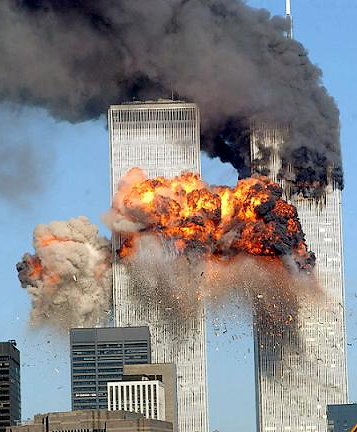
Over the 5 year history of Καθολικός διάκονος I have only re-posted three or four items. Today I am re-posting a homily I preached at a daily Mass back in 2006 at Holy Family Church in South Ogden, Utah on the fifth anniversary of 9/11. Today we pray for the repose of those who were killed in the attacks, healing for those who survive them, and above all that the peace of Christ will be realized throughout the world. We pray today for those who are serving in Iraq and Afghanistan, serving the cause of peace and justice.


Readings: 1 Cor 5,1-8; Ps 5, 5-7.12; Lk 6,6-11

"Lead me in your justice, Lord," we ask in today’s Psalm response (Ps 5,8). The Psalmist also sings: "For you, O God, delight not in wickedness; no evil man remains with you" (Ps 5,4). Indeed, it is appropriate to call to mind the Lord’s justice on this fifth anniversary of 9/11. The Lord our God is just in all his ways. More importantly to us sinners, God is merciful. We certainly ask God’s mercy to be upon those who perished in the unspeakably evil attacks on the Twin Towers, the Pentagon, and the third plane that crashed in a field in Pennsylvania. We ask God’s healing mercy to be with those wives, husbands, children, mothers and fathers, sisters and brothers, and close friends who lost loved ones on that horrible day. But, in light of our faith, which finds its perfect expression in the teachings of Jesus Christ, what should our attitude be toward those responsible for these attacks? Their wicked acts are to be condemned without a doubt, but what about our attitude to those who mean us harm, our enemies? This question is not asked, like Jesus’ questions in today’s Gospel, rhetorically, with the answer being obvious. Neither is it asked in order to receive a ready-made answer; it is asked as a question for each of us to ponder in our hearts this day on which we remember a horrible evil perpetrated by human beings upon other human beings, as we ponder "man's inhumanity to man."

A key to a Christian response to these questions is contained in our Gospel this morning. As with Saturday's Gospel, Jesus is violating Jewish Sabbath observance by healing a man with a withered hand. Prior to doing this, our Lord asks the Pharisees, "is it lawful to do good on the sabbath rather than to do evil, to save life rather than to destroy it?" It is easy to imagine Jesus asking this question and waiting for a few awkward moments for a reply, while the Pharisees shuffled around, looked at their feet, and mumbled. In this instance he receives no reply. So, he goes ahead and heals the man’s withered hand (Lk 6,9-10). Like all the words and actions of our Lord, there are many lessons to be drawn from this episode, especially from his questions. Let us consider just two. Let us first consider his question about the lawfulness of doing good rather than do evil on the Sabbath. For the disciple of Jesus it is obligatory always and everywhere to do what is good and avoid what is evil. The second point is that, life being sacred, we are always obliged to save life. In other words, we are to be healers.

In order to heal we have to be healed. To be healed, in each of our cases, means to be forgiven. In order to be forgiven, we must forgive. To forgive requires mercy. In his Sermon on the Mount Jesus tells us, "Blessed are the merciful, for they will be shown mercy" (Matt 5,7). It is important to note that mercy does not cancel out justice. Because it does not sometimes in our fallen and sinful world justice requires resorting to the use of force. Our Lord tells us in his rhetorical question to the Pharisees it is better to save life than to destroy it. In the context of 9/11 and its aftermath, we must keep in mind that the ultimate goal of just war is to re-establish peace. More specifically, the peace established after the war must be preferable to the peace that would have prevailed if the war had not been fought. What this reinforces is that vengeance, which Paul, in concert with the Psalmist, tells us in Romans, is the Lord’s (Rom 12,19 ), plays no part in the Christian response to any evil, even one as horrific as the 9/11 bombings.

Regardless of where we stand with regard to certain "hot button" issues we know that peace and mercy begin with us. Therefore, we must practice both daily in all of our interactions, in our homes, in our places of work, and here in our parish, which should be a model of true justice brought about by mercy and resulting in peace. Because we have freely chosen to follow the way of the Lord Jesus, we are committed to acting intentionally in our efforts to adhere to the objective standards of morality clearly taught us by him. In other words, we obey Jesus because we love him (Jn 14,15 ). If our love for God is genuine, it leads to love of neighbor. Our neighbor, of course, is every person. Acting intentionally means knowing what our motives are. It also means knowing what our motives should be. This, in turn, requires us to pray, work, and cooperate with God so as to bring our will and our desires into conformity with Christ’s teachings.

So, while our faith enables us to discern what is good and what is evil, it also teaches us that we are sinners, who have done evil ourselves and who have been forgiven. God’s justice was satisfied in the act of ultimate mercy; Jesus Christ nailed to the Cross for our sins. Of all people, Christians understand that we must be merciful because we have received mercy. In a few moments we will pray the Our Father, the prayer taught us by our Lord himself. In this prayer we will ask God to forgive us our trespasses as we forgive those who trespass against us. Scripture tells us, "judgment will be without mercy to anyone who has shown no mercy; mercy triumphs over judgment" (Jas 2, 13). Let these reflections be the background against which we consider the questions raised by justice and mercy on this day during which remember so great an evil.

Year C Twenty-second Sunday in Ordinary Time

Readings: Sir. 3:17-18.20.28-29-; Ps 68:4-7.10-11; Heb. 12:18-19.22-24a; Luke 14:1. 7-14

You would have to be pretty inattentive not to discern that the main theme taken up in today’s readings is humility, our need to be humble. Humility is what is called a natural virtue. When we speak of natural virtues, we are talking about those attributes and characteristics that make us better people. So, in speaking of the virtues we are talking about nothing less than striving to be perfect, which means striving to become more like Christ. As with all the natural virtues, humility is acquired through habit, that is, by practicing it. In his parable from today’s Gospel, Jesus gives a great and very concrete example of the kind of practice that leads to acquiring and perfecting the virtue of humility when he instructs the dinner guests that when they are invited to a wedding banquet to "go and take the lowest place so that when the host comes to you he may say, 'My friend, move up to a higher position'" (Luke 14:10).

We can define humility as that virtue "by which a person considering his own defects has a lowly opinion of himself and willingly submits himself to God and to others for God’s sake" (Catholic Encyclopedia, "Humility"). Of course, there is such a thing as false humility. But, because most of us are naturally quite haughty and puffed up, beginning attempts at practicing humility are bound to look and feel a little false. Of course, it is contrary to humility to draw attention to any attempt we make at being humble. In other words, it is in keeping with the essence of humility that nobody notices you are trying to be humble. So, the only truly false humility is what we might call ostentatious humility; attempts at being humble aimed at showing everyone how humble you are.

In age in which everyone grows up wanting to be famous, humility, along with modesty, is becoming rarer all the time. It seems that to get anywhere in life we are forced to become tireless self-promoters. Turning back to our definition of humility, you are humble because, if you are really honest with yourself, you are aware of your defects and understand the need to submit yourself to God. Some defects, like procrastination, seem to be universal, while others may be more peculiar to you. Your defects, by the very fact that you recognize them as such, move you to look for ways to overcome them, which means nothing less than overcoming yourself, getting over a lifetime, or at least many years of bad habits. When it comes to the natural virtues it is the case that practice makes perfect, or, as a football coach of mine used to remind us during the end of the second practice of the day in the heat of August- "Practice doesn’t make perfect. Perfect practice makes perfect."

Even with the natural virtues, while you can make considerable progress through your own efforts, to really be brought to perfection, to practice them perfectly, you need help, that is, you require grace. Just as the Lord gives us very concrete examples of how to practice humility in today’s Gospel, there is a concrete way of understanding how grace perfects nature. Just as any initial attempt to practice the virtue of humility will feel a little forced, it is not uncommon to fail, either at the beginning of your attempt, or later, especially after you feel you have made real progress, only to realize in a single moment that maybe you have made no progress at all. Your natural reaction to failure is to be discouraged and be sorely tempted to give up, seeing yourself as hopeless. To see things in this way, especially to be tempted to despair, is to act as though you can do it all on your own, without help. The fact that you realized you have failed is a grace in and of itself. It is useful insofar as you take it to the Lord, imploring his help. If your failures are serious enough, or frequent enough, or even just bothersome enough, the place to seek succor is in the sacrament of penance, going to confession.


The grace we receive in this sacrament is something too many of us are willing to live without. There are two reasons for this, as far as I can tell. First, you are too proud either to see that you are a sinner in need of forgiveness, or because you see yourself as able to obtain this grace on your own without the benefit of the sacrament, effectively saying you don’t need the church. I remind you that even in the prayer of absolution, Christ gives you pardon and peace and absolves you of your sins only through the ministry of the church, thus reconciling you to God and to your sisters and brothers, with whom you gather around the table of the Eucharist. Besides, I am hard-pressed to think of a better way of practicing humility than by going to confession on a regular basis. The second reason many do not drink from this fountain of grace is that, in a bizarre instance of pride that wears the mask of humility, some think their sins bigger, wider, or deeper than God’s mercy given us in Christ Jesus; or, foolishly worry whether or not God will forgive them. My friends, you do not go to confession in order see whether or not God will forgive you; because of the death and resurrection of Jesus Christ you are always already forgiven, you to go to confession in order to realize this fact and to see firsthand why it matters to you.

If the humble person realizes anything he realizes that he is a beggar, impoverished, a person in need. As Fr. Julián Carrón observed recently, "We must ask for this grace; we must go like poor men to eat the bread that is called Eucharist… We are well aware that we need, as beggars, to get in line, and go limping to receive the food we can’t get by without… In the same way, we must go to beg for and receive the grace of forgiveness in the Sacrament of Penance, to start all over again every time we fall" (Can A Man Be Born Again, Once He Is Old? pg. 48). God not only makes "a home for the poor," but feeds us with his body and blood.


So, caring for the materially poor- for the person in need- is something the truly humble person, especially the one who knows God’s mercy firsthand, hastens to do. As the last phrase of our reading from Sirach says, "alms atone for sins" (Sir. 3:29). This brings up two other disciplines that are necessary for anyone who follows Christ: fasting and prayer. These three practices(alms-giving, fasting, and prayer), one flowing from the other, are efficacious for acquiring all the virtues. In fact, Jesus’ exhortation to "invite the poor, the crippled, the lame, the blind" to any banquet you might hold, instead of friends, relatives, and wealthy neighbors, who will repay you in kind, should put us in mind of what Jesus says in Matthew’s Gospel, a passage we read each Ash Wednesday, about alms-giving, praying, and fasting, namely that if you do these things in order to draw attention to yourself, you already have your reward(Matt. 6:1-6). Jesus says that by acting charitably towards those who cannot repay, "you will be repaid at the resurrection of the righteous" (Luke 14:14).

My dear friends, in Christ, our Mass readings these past several weeks are very challenging. Through these words the Lord, in addition to drawing our attention back to what it means to truly follow him, which amounts to serving others selflessly for his sake, calls each one of us to renew our commitment to following to him, which means letting go of what English church commentator Damien Thompson calls our "happy clappy" notions and begin living life with more seriousness and rectitude, which is a paradox, like losing your life for the Lord’s sake is the only way to save it, and is the path to true joy.